
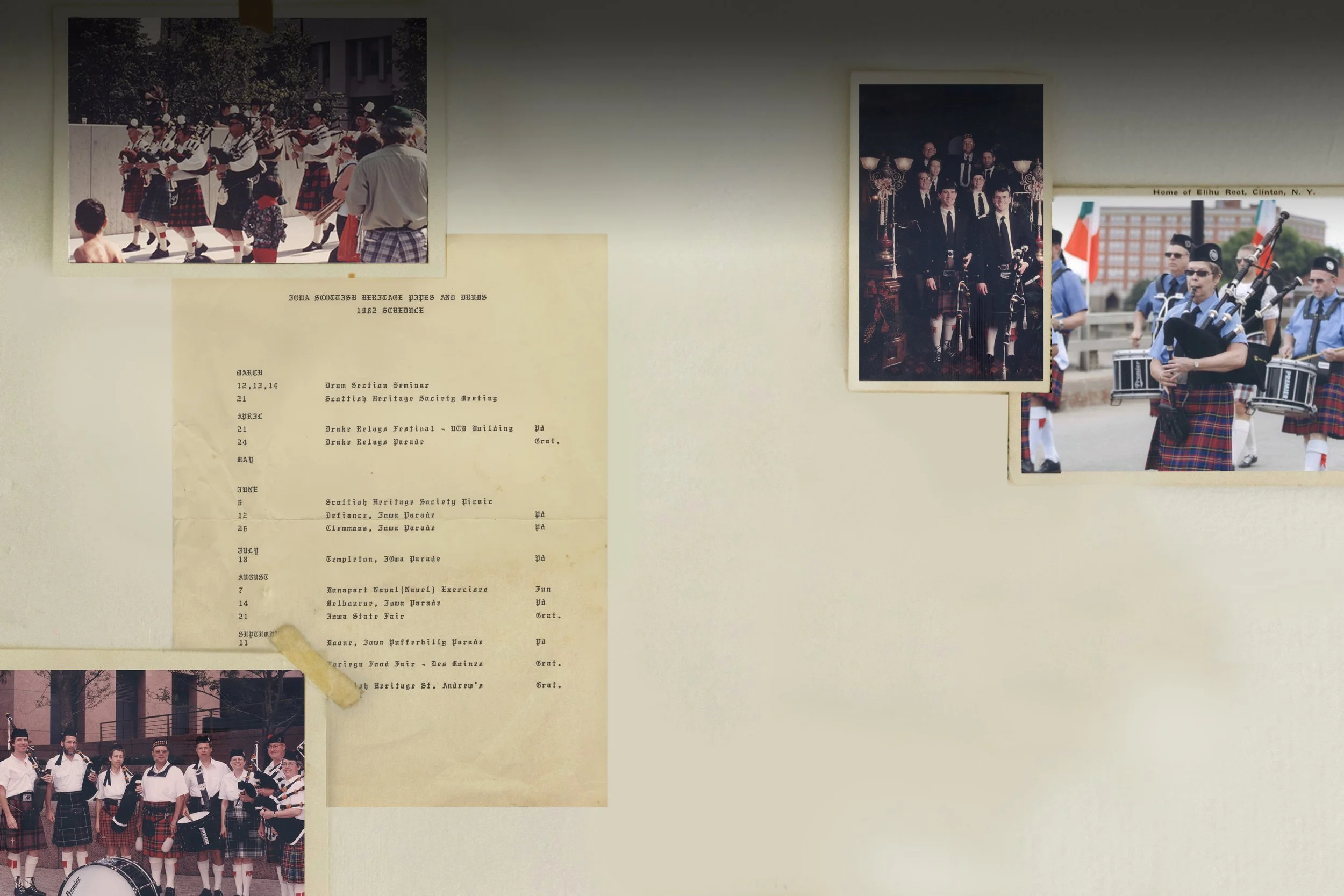
Who would have thought that a simple ad in the Des Moines newspaper would have been the catalyst for not only a Scottish heritage society but a bagpipe band?

Kaye and Warren Caldwell returned home after attending a Scottish gathering in North Carolina. Their visit inspired them to determine if there would be enough interest in starting a Scottish society in central Iowa. They placed an ad in the Des Moines Register (the social media available at the time) and soon a group was formed. Among the initial respondents were several people who played the bagpipes, including members that had learned bagpiping from other bands like the Za-Ga-Zig Shrine pipe band and the University of Iowa Scottish Highlanders. Pipers would come and play for the meetings and found that they enjoyed playing together in a group. Once drummers started joining, a loan from the Society allowed the fledgling group to purchase unique Scottish-style drums. The group soon started practicing on their own and the Iowa Scottish Heritage Society Pipes and Drums was born. (Eventually the name was shortened to Iowa Scottish Pipes and Drums and the band was incorporated as a 501(c)(3) organization.)
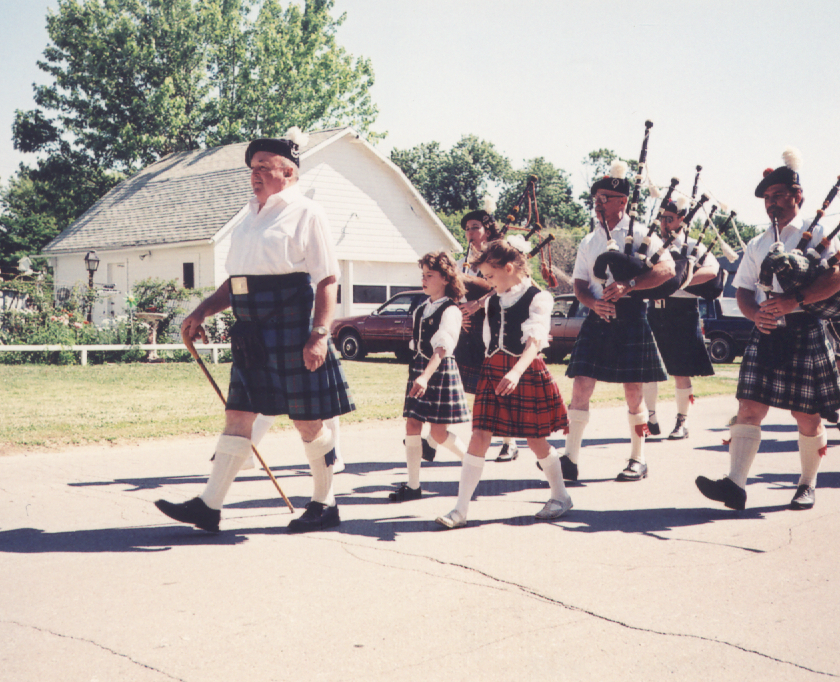
Tunes were standardized, drum scores were written, and the band continued to play at Scottish Heritage Society functions. Once word got around the band began receiving invitations to play for other events. One of the first paid performances was for a St. Patrick’s Day parade in Emmetsburg, IA. Centennial celebrations soon became common and the band played for several of these. Many festivals requested parade performances, including the Schaller Popcorn Days, the Pufferbilly Days in Boone, Tulip Time in Pella and the Irish Fest in Waterloo.
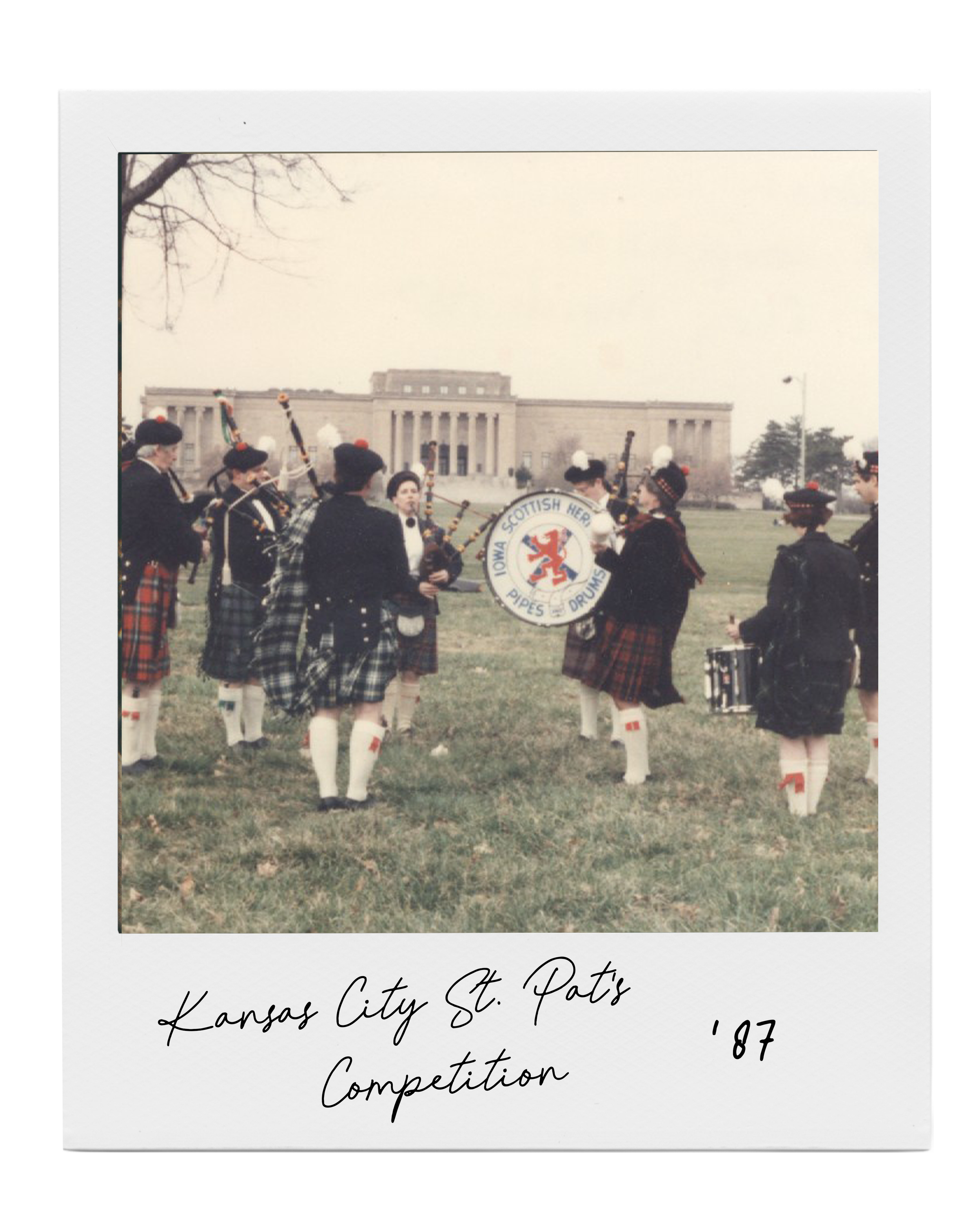

In addition to being a performing band, the group began playing in bagpipe band competitions. They attended their first competition in Chicago in 1981. Since then the band has traveled to bagpipe band competitions in Iowa, in surrounding states and even as far away as Pleasanton, California and Montreal, Quebec, Canada. At one point the band had enough accomplished players to compete at a higher level, mainly thanks to the leadership of a transplanted Canadian piper named Alex Stewart. Competing had many benefits, including improved proficiency for both the individuals and the band. It also drew the band members closer together, having suffered through heat, rain and a plague of locusts to become either triumphant with a win or disappointed by a loss. The band last competed in 2010.
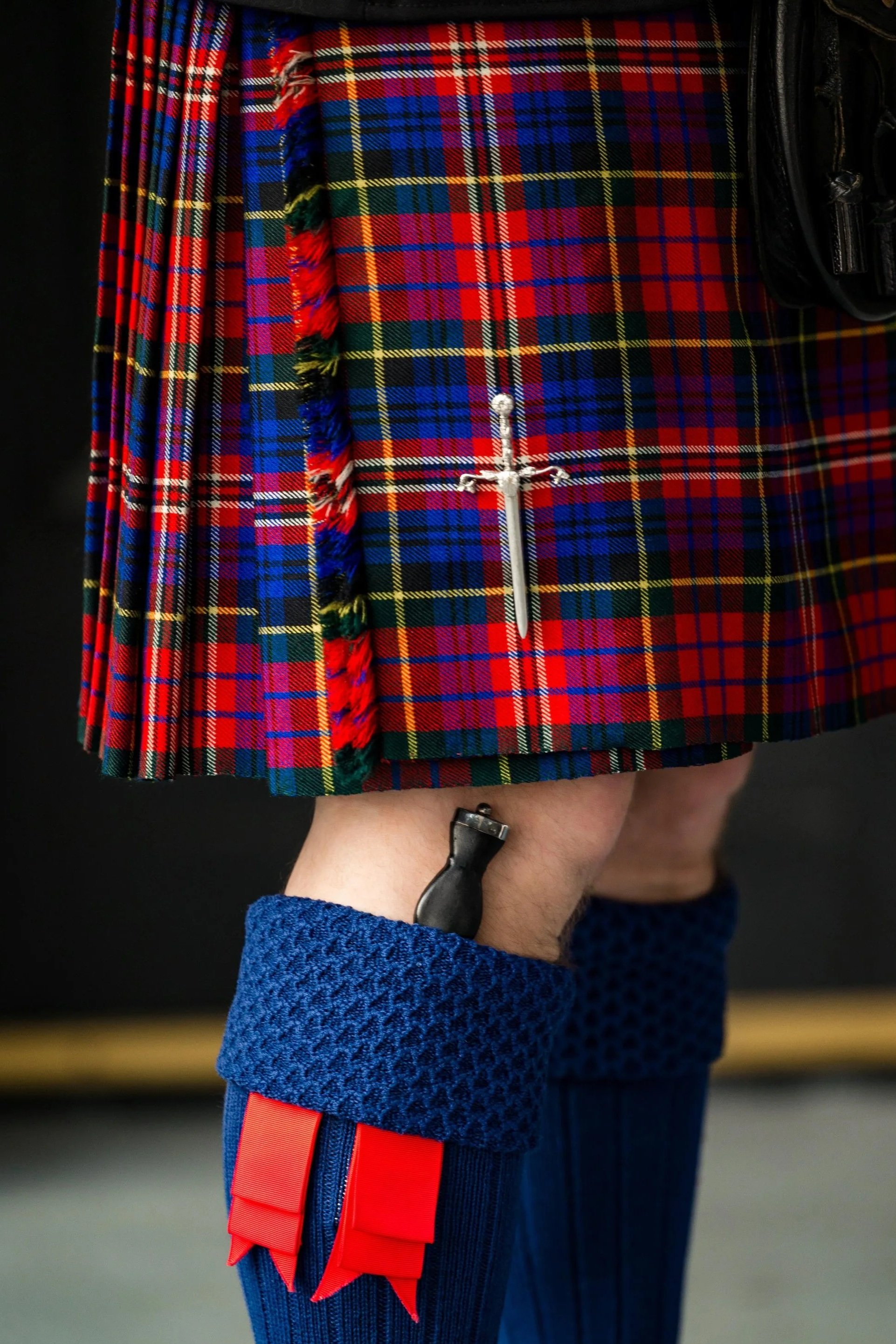
At the beginning each member of the band wore their own personal kilt, which meant that many different Scottish clans (families) were represented by the different patterns of the material in the members’ kilts. It wasn’t until about 2005 that the band had raised enough funds from performances as well as selling CDs, t-shirts and hats that it was decided to purchase matching kilts. A committee to pick the clan tartan decided on the Red MacPherson tartan, which the band has worn to this day.
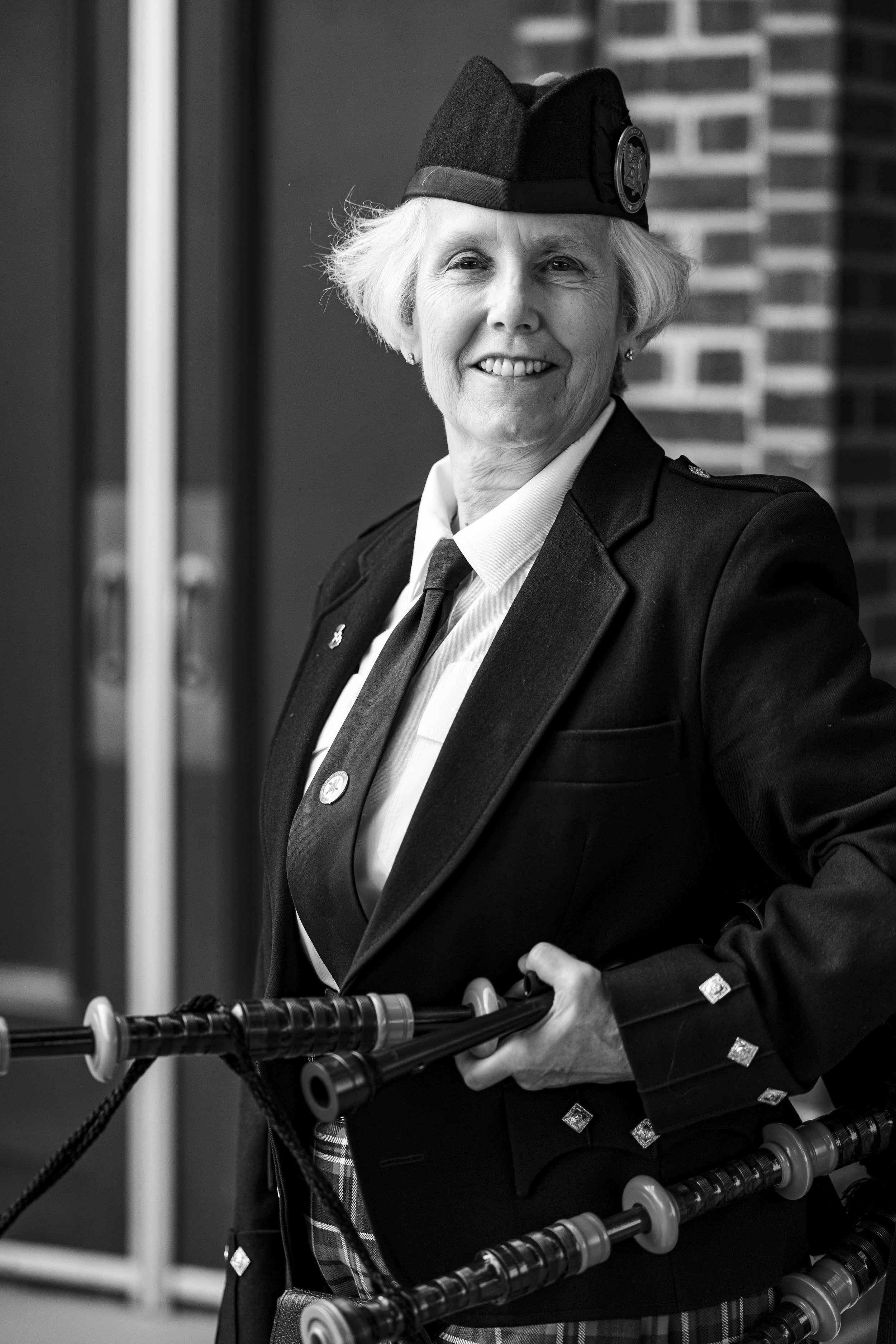
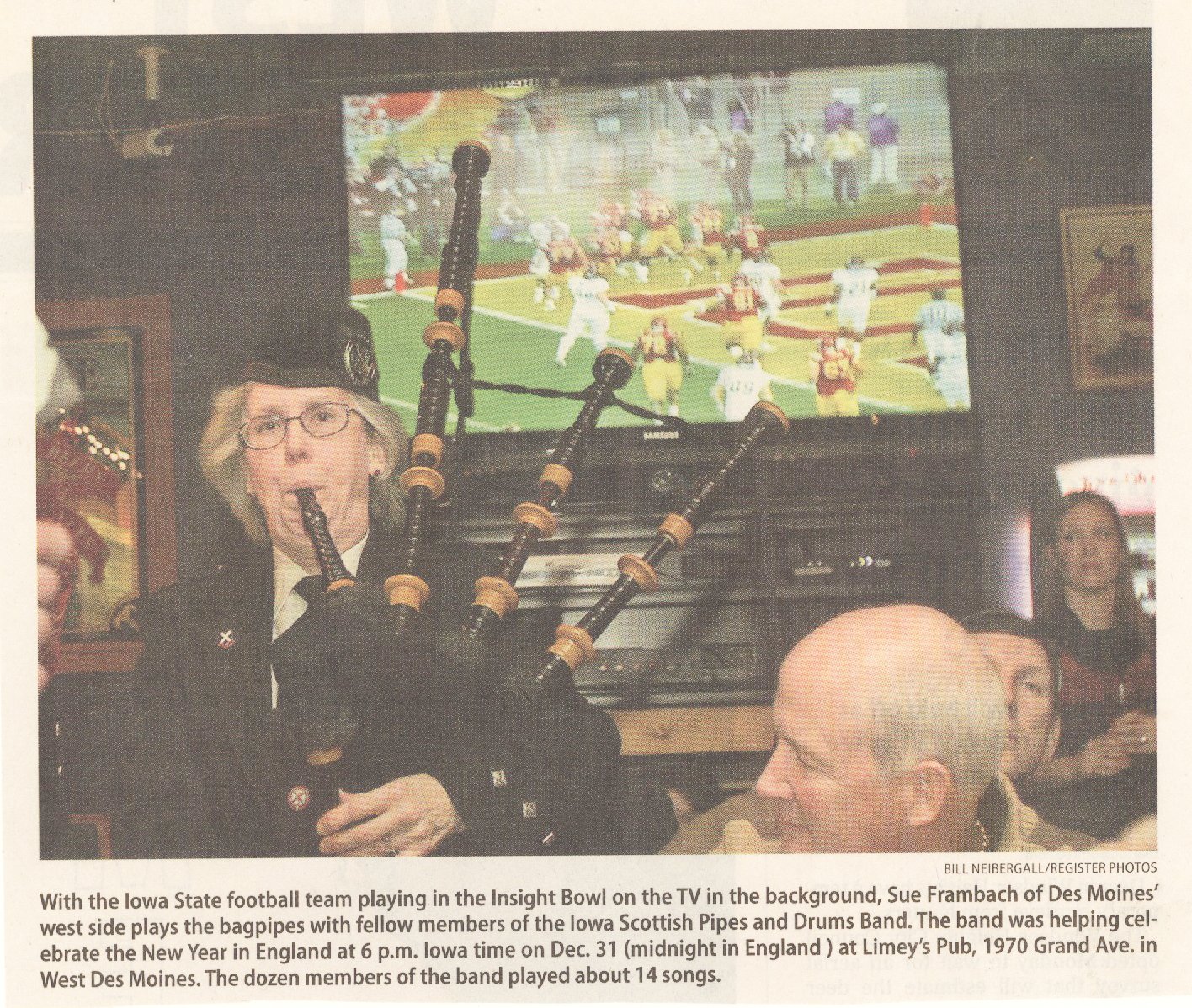
Many people have contributed to make Iowa Scottish Pipes and Drums what it is today, but probably the biggest contributor has been Susan Frambach. Like the vast majority of her fellow University of Iowa Scottish Highlanders, Susan had never seen a set of bagpipes before being accepted into the Highlanders. She rose to the rank of Pipe Sergeant and after graduation became a member of the Scottish Heritage Society in 1974 and started teaching lessons in her native Des Moines. She has taught an untold number of students, from elementary age to seniors in their 60’s and 70’s, and many of them eventually became skilled enough to play with the band. It’s not an exaggeration to say that Iowa Scottish Pipes and Drums would not exist without her contribution.